
 April
14
April
14
Tags
The Ban Bossy Campaign: Why I Can’t Get on the Bandwagon
I hate the “Ban Bossy” Campaign. It actually makes me angry. For one thing, this campaign makes broad statements without concrete evidence, blames one word for women’s issues in the work place and girl’s lack of leadership and just seems frivolous. What makes it worse is that I actually really wanted to like the campaign because I like “Lean In” and I respect Sheryl Sandberg, but I just can not get on board with this.
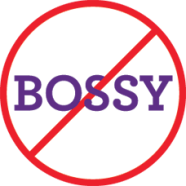
Before I discuss my position further, take a look at the two major ads that are used to promote this campaign:
This is the more prominent one:
This one is other, but also the less used one
No doubt these ads hold some appeal. It would be great if we could point at a word and say, “here is the reason for all of the world’s gender equality issues.” However, we can’t do that and the fact that this is what the campaign aims to do, makes the whole “Lean In” movement seem uniformed.
First, let’s look at the statements that these videos make:
- When a girl asserts herself she is called bossy: I am sure that’s true some of the time, but it’s certainly not true all of the time. A lot of little girls assert themselves and they are not called that. And most of the time, when someone is called bossy, it’s because they are being bossy. In the first video, Sheryl Sandberg says that she was called bossy when she was a little girl. And I’m sure it hurts her feelings, but does that mean it was wrong or that we should ban a word because it hurt her? I would say it may have been an accurate description given that she’s being bossy now. Just because you don’t like a word, doesn’t mean we should ban it. And just because you don’t like being called something doesn’t mean that you don’t need to hear it. Taking away people’s ability to give honest feedback is very detrimental.
- When a boy asserts himself he is called a leader. I really don’t think this is true, when a little boy asserts himself he is often times called a trouble maker or stubborn.
- By middle school girls are less likely to raise their hands and less interested in leadership; this might be true, but what does that have to do with being called bossy? Unless girls are called bossy constantly for raising their hands, which would be a pretty farfetched claim, it may have nothing to do with being called bossy. Is it possible that in middle school girls are often self conscious because of all the changes that they are going through, rather than because they were called bossy? Or could it be that it’s because they don’t know how they feel about things, they are trying to figure that out in this time frame? Is there any evidence that there is a difference in hand raising decrease between girls who are called bossy and girls who aren’t?
- In colleges across the country, women outnumber men. Clearly, women are not discouraged from becoming educated and continuing to learn. Let’s really locate what stops women from picking leadership positions in the business fields and focus on that.
Last week, a poll was shared on this blog asking readers what they thought of this campaign. A total of 40 people took this poll, so thank you so much to those that did. The results are as follows:
| I am a woman and I love it 35% (14 votes) |
| I am a woman and I don’t have strong feelings about it 32.5% (13 votes) |
| I am a woman and I hate it 10% (4 votes) |
| Other: 10% (4 votes) |
| I am a man and I don’t have strong feelings about it 7.5% (3 votes) |
| I am a man and I hate it 5% (2 votes) |
| I am a man and I love it 0% (0 votes) |
It is telling that not a single man loved this campaign and that a majority of women did not find this campaign very appealing.
One of the reasons that I hate this so much is because it sends very mixed signals and creates confusion. We really can’t say that women are strong enough to be at the same table as men and at the same time that we are so fragile that we need to be protected from a word. After all, aren’t men called “controlling” when they get too aggressive? Aren’t little boys called “stubborn” or “trouble makers” when they’re being bossy?
The truth is people often associate bossy with leadership and traditionally in business this was the only thing seen as leadership, though thankfully that’s changing. It may have actually helped people to get where they are and chose the fields that they have because these characteristics were pointed out to them.
When I was growing up, no one called me “aggressive” or “bossy,” instead I was called “gentle” and “feminine” and “so helpful and kind.” As I got older, I was always told that the fields that I was leaning towards were going to eat me alive. I was just too nice to be successful in a business; instead I should be a pediatrician.
The truth is, I am feminine and I am gentle and nice, but that has helped me in my career. I don’t try to play the game by the same rules the boys do. And getting that feedback has helped me understand that I really can’t be aggressive and I have to find another way to get what I want and influence others around me. I play to my own strength. In a male dominated, egocentric field there is something powerfully influential about being the person who offers to help others.
I like the way that Malcolm Galdwell re-frames the story of David and Goliath…you can watch a summary here:
If David had taken Goliath on in the way that everyone was expecting, there is no way that he would have won, he would have been playing to his opponent’s strength. Instead, he confidently approaches a giant way larger than him fully confident that he is going to win because he is playing to his own strengths.
I am not saying that every woman needs to be feminine and gentle in the work place. What I am saying is that there are much bigger issues that are keeping women out of leadership positions today, that Sheryl Sandberg was starting to hit on before this campaign and this is not only distracting to what she was trying to accomplish, but also alienates both men and women. Picking a gender-neutral word to dwell on is not something that’s going to help women get recognition and support in the work place. Man, woman or child, if you are overly aggressive or bossy, you need to be told that. I am glad I got that honest feedback, even if the conclusion was wrong, the analysis was right. Not having that kind of straight forward and honest assessment would have hurt me in the long run. Likewise, girls who are bossy need to hear that they are bossy because not hearing that is going to hurt them in the long run.
Let’s go back to talking about the widespread issues that are affecting us in the work place and those that are stopping women from becoming interested in or at least pursuing leadership roles. And please stop being so bossy.
I would love to hear what you all think of this campaign, so please leave a comment below letting me know what you think. Also, please don’t forget to hit the follow blog button on the right so that you can be in the loop as new posts are loaded.
 workingtoworld